
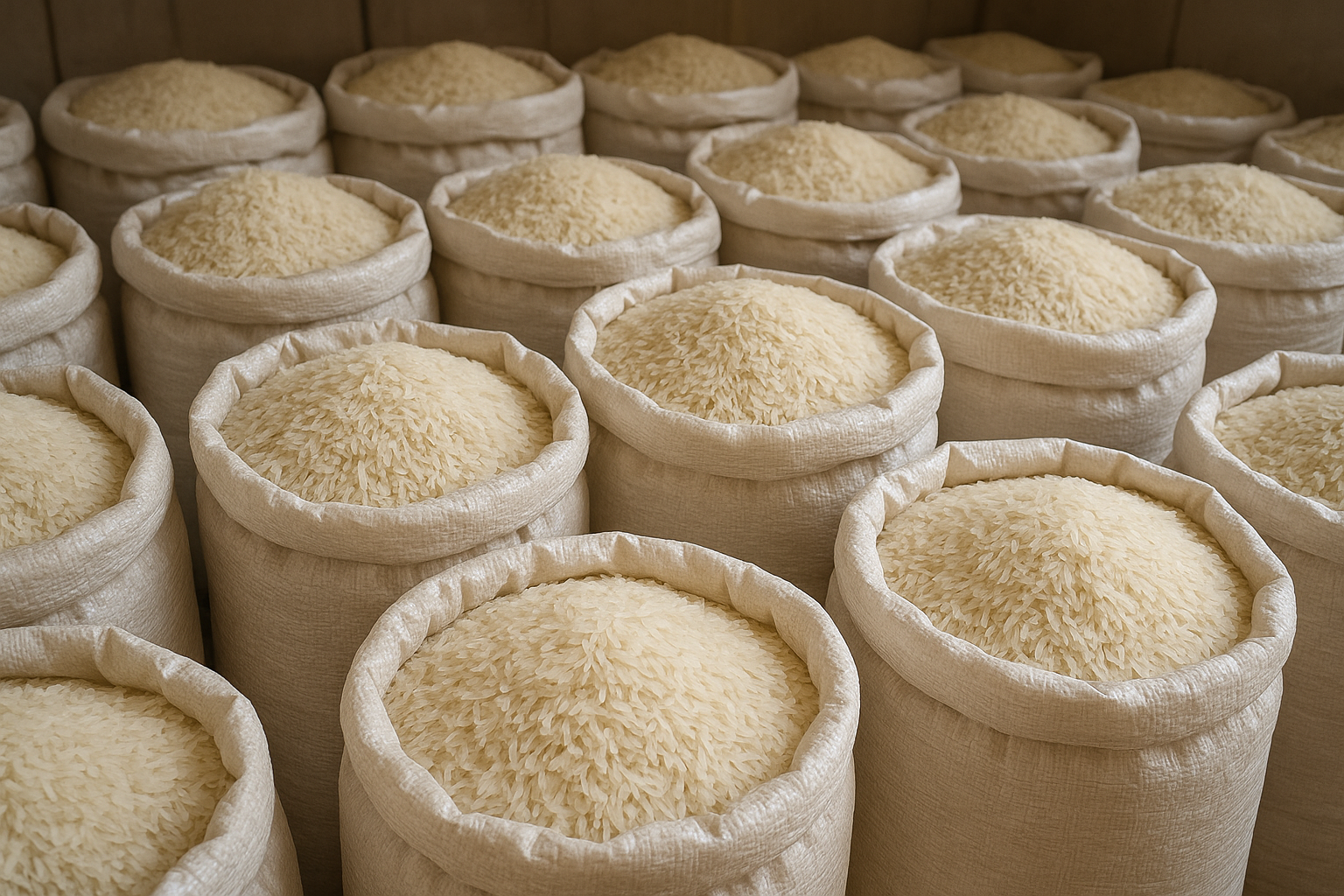
Rice Rate Today In Pakistan 2026
Note: All prices are indicative market rates in Pakistani Rupees (PKR), last reviewed in September 2026. Actual prices vary by city, shop, brand, crop year and packaging, so confirm the rate with your local dealer before buying in bulk.
| Quantity | Minimum Price (PKR) | Maximum Price (PKR) |
|---|---|---|
| 1 kg Basmati Rice | 310 | 420 |
| 5 kg Basmati Rice | (estimated) 1,550 | (estimated) 2,100 |
| 10 kg Basmati Rice | (estimated) 3,100 | (estimated) 4,200 |
| 25 kg Basmati Rice | 5,000 | 7,800 |
| 50 kg Basmati Rice | 14,999 – 15,050 | 16,800 – 16,400 |
| 100 kg Basmati Rice | (estimated) 29,998 | (estimated) 32,800 |
| 1 Ton Basmati Rice | (estimated) 344,000 | (estimated) 439,000 |
Branded Rice Prices In Pakistan Today
| Rice Variety | White | Sella | Steam |
|---|---|---|---|
| Kainat 1121 Rice 40 KG | Rs. 6150 | Rs. 7050 | Rs. 7500 |
| Kainat 1121 B1 Broken 40 KG | Rs. 3560 | Rs. 3600 | Rs. 4100 |
| New Super Basmati 40 KG | Rs. 5650 | Rs. 5600 | Rs. 6500 |
| Kainat 1121 Short Grain 40 KG | Rs. 4300 | Rs. 4500 | Rs. 4650 |
| Basmati 386 40 KG | Rs. 3900 | Rs. 4500 | Rs. 4550 |
| Super Basmati Old 40 KG | Rs. 5600 | Rs. 6100 | Rs. 6600 |
| Irri 6 40 KG | Rs. 3300 | Rs. 3550 | Rs. 3850 |
| C 9 40 KG | Rs. 3700 | Rs. 4000 | Rs. 4150 |
| Super Fine 40 KG | Rs. 4200 | Rs. 4000 | Rs. 5050 |
| Supri 40 KG | Rs. 3700 | Rs. 5500 | Rs. 4150 |
| Super 1509 40 KG | Rs. 5300 | Rs. 5500 | Rs. 6050 |
| Super B2 Broken 40 KG | Rs. 3400 | Rs. 3550 | Rs. 3750 |
| Super Short Grain 40 KG | Rs. 4100 | Rs. 4450 | Rs. 4550 |
Munji Rice Rate Today in Pakistan
| Rice Variety | Minimum Price | Maximum Price |
|---|---|---|
| IRRI-6 Munji | Rs. 2050 | Rs. 2750 |
| Hybrid Munji | Rs. 2160 | Rs. 2800 |
| Hybrid LP-18 Munji | Rs. 2250 | Rs. 2660 |
| Supri Munji | Rs. 2300 | Rs. 2850 |
| Laal-86 Munji | Rs. 2600 | Rs. 3200 |
| IRRI Fine Munji | Rs. 2300 | Rs. 3250 |
| Super 1509 Munji | Rs. 3200 | Rs. 4250 |
| Super Fine 1692 Munji | Rs. 3200 | Rs. 4200 |
| Super 1509 Munji (Old) | Rs. 4650 | Rs. 5000 |
| Super Kainat 1121 Munji (Old) | Rs. 4700 | Rs. 5150 |
City Wise Munji Prices (Super 1509 / 1692)
| City | Min Price (PKR) | Max Price (PKR) |
|---|---|---|
| Lahore | 3,150 | 4,250 |
| Islamabad | 3,200 | 4,300 |
| Karachi | 3,050 | 4,200 |
| Hafizabad | 3,100 | 4,100 |
| Gujranwala | 3,100 | 4,300 |
| Sialkot | 3,200 | 4,200 |
| Faisalabad | 3,100 | 4,250 |
| Arifwala | 3,100 | 4,200 |
| Multan | 3,050 | 4,200 |
| Ali Pur Chatha | 3,200 | 4,200 |
| Islamabad | 3,200 | 4,300 |
Rice serves as a staple food for millions of Pakistani households, making price fluctuations a matter of significant concern for consumers across the country. Understanding current market rates helps families budget effectively while ensuring they get the best value for their money.
This comprehensive guide covers today’s rice prices in Pakistan, from premium basmati varieties to affordable everyday options, helping you make informed purchasing decisions for your household needs.
Current Basmati Rice Prices
Basmati rice is a timeless favorite, cherished for both everyday meals and special occasions. Here are the current market rates across different quantity ranges:
Small Quantity Purchases:
- 1 kg Basmati Rice: PKR 310-420
- 5 kg Basmati Rice: PKR 1,550-2,100
Bulk Purchases:
- 10 kg Basmati Rice: PKR 3,100-4,200
- 25 kg Basmati Rice: PKR 5,000-7,800
- 50 kg Basmati Rice: PKR 14,999-16,800
Commercial Quantities:
- 100 kg Basmati Rice: PKR 29,998-32,800
- 1 Ton Basmati Rice: PKR 344,000-439,000
The significant price range reflects quality differences, with premium aged varieties commanding higher prices compared to newer harvest rice.
Branded Rice Varieties and Processing Types
Different processing methods affect both price and cooking characteristics. Here’s how popular brands price their 40kg bags across three main processing types:
Premium Varieties:
- Kainat 1121 Rice leads the premium segment with prices ranging from PKR 6,150 for white rice to PKR 7,500 for steam-processed varieties
- Super Basmati Old commands PKR 5,600-6,600 depending on processing type
Mid-Range Options:
- Super 1509 offers good value at PKR 5,300-6,050
- New Super Basmati provides quality at PKR 5,650-6,500
Budget-Friendly Choices:
- Irri 6 remains the most affordable at PKR 3,300-3,850
- C 9 variety offers decent quality at PKR 3,700-4,150
Processing types significantly impact pricing, with steam-processed rice typically commanding the highest prices due to enhanced texture and longer shelf life.
Munji Rice Market Rates
Munji, also known as broken rice, offers a cost-effective and versatile option for everyday cooking. Current market rates show:
Standard Varieties:
- IRRI-6 Munji: PKR 2,050-2,750
- Hybrid Munji: PKR 2,160-2,800
- Supri Munji: PKR 2,300-2,850
Premium Broken Rice:
- Super 1509 Munji: PKR 3,200-4,250
- Super Fine 1692: PKR 3,200-4,200
Aged Varieties:
- Super 1509 Munji (Old): PKR 4,650-5,000
- Super Kainat 1121 Munji (Old): PKR 4,700-5,150
Aged munji commands premium prices due to superior cooking qualities and enhanced flavor profiles.
Regional Price Variations
Rice prices vary across major Pakistani cities due to transportation costs, local demand, and regional preferences. For Super 1509/1692 munji varieties:
Northern Cities:
- Islamabad: PKR 3,200-4,300
- Gujranwala: PKR 3,100-4,300
- Sialkot: PKR 3,200-4,200
Central Punjab:
- Lahore: PKR 3,150-4,250
- Faisalabad: PKR 3,100-4,250
- Hafizabad: PKR 3,100-4,100
Southern Regions:
- Karachi: PKR 3,050-4,200
- Multan: PKR 3,050-4,200
Karachi and Multan generally offer slightly lower prices due to proximity to major rice-producing areas and better supply chain networks.
Making Informed Rice Purchasing Decisions
Whether you’re purchasing small quantities for immediate use or buying in bulk for long-term storage, understanding these price structures helps optimize your food budget.
Monitor local market trends and compare prices across different suppliers to ensure you’re getting the best value. Consider mixing different varieties based on your cooking needs – premium basmati such as Kainat 1121 or Super Kernel for biryani, pulao and guests, and more affordable options such as Irri 6, C 9 or munji for everyday meals, kheer and khichdi.
Tips to Get the Best Rice Price
- Buy by the bag when you can: 25 kg and 40 kg bags work out cheaper per kilogram than 1 kg or 5 kg packs.
- Check the crop year: aged (purana) basmati cooks longer and more fluffy, but new-crop rice is noticeably cheaper.
- Match the rice to the dish: use sella or steam basmati for biryani and pulao, and white rice or munji for plain rice, khichdi and kheer.
- Inspect before buying: look for uniform grains, low broken percentage, no dust or insects and a natural aroma.
- Store it properly: keep rice in an airtight container in a cool, dry place to protect it from moisture and weevils.
More Rice Prices
Frequently Asked Questions
What is the price of 1 kg basmati rice in Pakistan today?
1 kg of basmati rice currently sells for around PKR 310 to PKR 420 in retail markets. Older (aged) and branded basmati sits at the top of this range, while new-crop loose basmati is cheaper.
What is the difference between white, sella and steam rice?
White rice is milled raw paddy. Sella (parboiled) rice is soaked, steamed and dried before milling, so the grains stay separate and firm. Steam rice is lightly steamed before milling, which improves aroma and cooking length. Steam rice usually costs the most, followed by sella, then white.
Why is munji rice cheaper than whole-grain rice?
Munji is broken rice collected during milling. It cooks the same way and tastes the same as the parent variety, but because the grains are not whole it is priced lower, which makes it popular for daily meals, khichdi and kheer.
Which city has the cheapest rice in Pakistan?
Karachi and Multan usually show slightly lower rates for Super 1509 / 1692 munji, at around PKR 3,050 to 4,200, while Islamabad and Gujranwala are at the higher end (up to PKR 4,300).
How often do rice prices change in Pakistan?
Rice prices move with the harvest (new crop arrives from October to December), export demand, fuel and transport costs and the rupee exchange rate. Wholesale rates can change weekly, so compare with your local market before buying in bulk.